Moles are a common occurrence on every human body. Some we are born with; some develop or disappear over time. Some are on places that are easy to see and others tucked away on parts of us we may never actually get a chance to look at. So, what are moles? Why do we have them? And is there any chance of them being a danger to our health?
Today we’re going to find out.
Moles are a very common skin growth made up of melanocytes. Melanocytes are pigment forming cells, they create the pigment melanin which is what gives skin it’s colour. The higher the concentration of melanin, the darker a person’s skin colour becomes.
A mole then is a cluster of these pigment forming cells that have gathered together forming the little or large brown spots you are used to seeing on your skin.
A mole can be flush and flat against the skin, or raised slightly. Moles form naturally and in general pose no immediate health threats, they grow and change with the body and continue to produce melanin for your skin’s pigmentation.
A mole is round or oval shaped, its edges are regular and smooth and they can have hair growing from them though this is not always the case. They appear darker on brown and black skin due to higher concentrations of melanocytes being naturally present in people with darker skin tones.
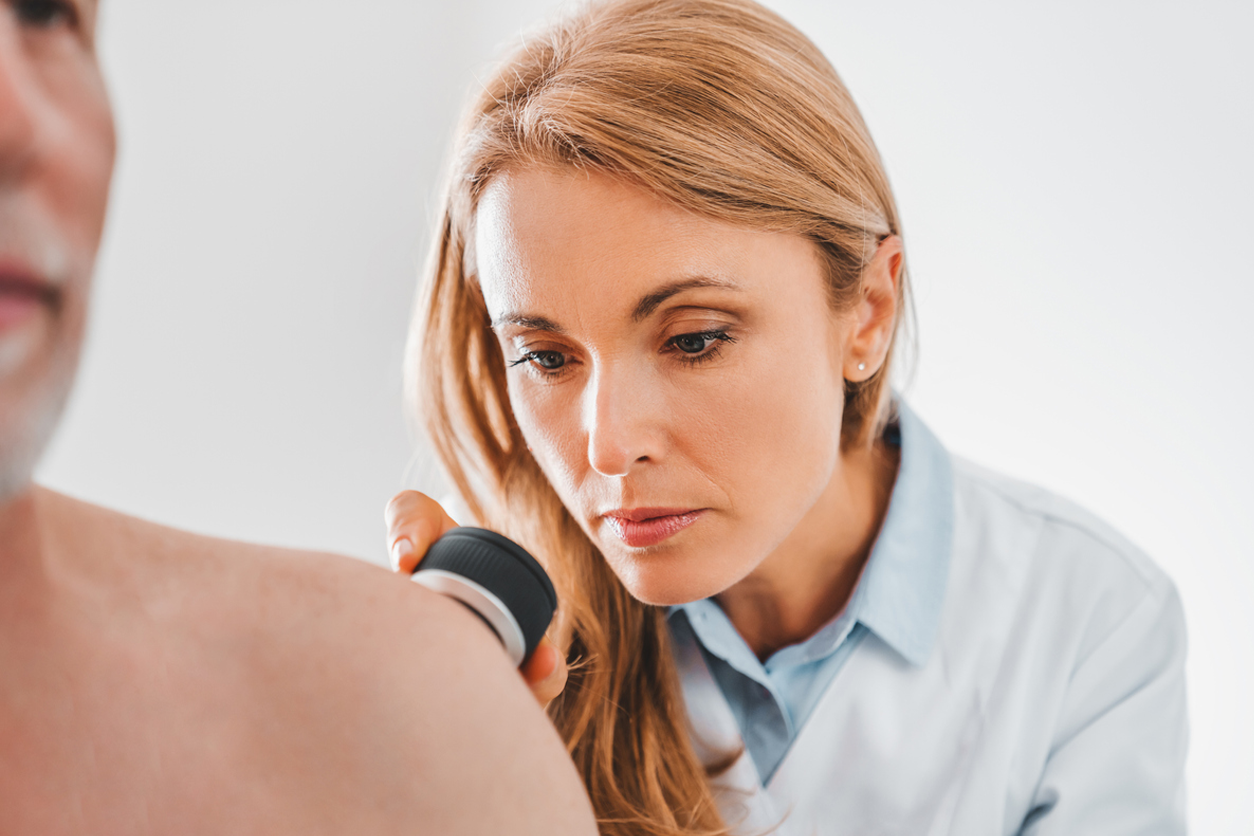
Checking to see whether a mole is healthy or if it needs to be seen by a doctor is a really straight forward procedure. It may take a little time in the beginning in getting to know your own body and the moles you currently have, but a few simple checks can let you know whether to see a doctor or not. Though, if you are ever in doubt, a quick appointment to a GP can clear up any worries and concerns you may have.
Healthy Mole: So, when you’re running through a mole check it is good to first know what a healthy mole looks like. A healthy mole should be:
Unhealthy Mole: It Is good to note how your moles look from time to time, and notice all the moles that conform to the above descriptions. One of the reasons for this is that if a mole begins to change, there could be an indication there is something wrong. So here is what to look out for if a mole changes, or one of your moles doesn’t conform to the above list.
These changes can occur slowly or quickly, and may take place over a period of weeks and months. Thus, it’s important to be aware of your moles and giving them a once over once a week to check in on their health.
Once you’ve identified moles as healthy, there truly is very little to worry about, simply be aware of any changes that take place, and if they appear to be like any of the changes stated above, contact your GP and get an appointment as soon as possible.
So why is it important to be aware of our moles and any changes they produce?
Moles are clusters of the cell’s melanocytes. There is no real reason for melanocytes to cluster as they do, they are supposed to be evenly distributed throughout the skin. However, just because they have clustered doesn’t mean anything is wrong. But when we have clusters of cells that begin to grow rapidly, or beyond their original function, these types of growths are what we call cancers.
A mole is mostly harmless, and the potential for a mole to become cancerous sounds more serious than it is. For the most part advances in scientific technology have made it easier to understand how cancer is formed and what risks there maybe, and so it seems like more cancer risks are cropping up wherever we go. But the reality is we just see more than we once saw, and that same scientific technology has allowed us to see cancer before it happens and begin preventative measures and curative measures if needed.
We say this because we consider it important for people to be aware for their own health and peace of mind, but we also don’t want people to unduly worry that their body might one day turn against them.
Moles are normal and natural, but have the potential to become something more dangerous. And so, we become aware of what a healthy mole looks like, and spend sometime taking a moment to check our moles and seeing if they have developed any changes.
If we see any of the changes listed above, at that point we contact our GP and allow a professional to take a look for us.
Melanoma is specifically a skin cancer, and when triggered its growth often begins with moles, and these are the changes you will see. A mole growing with uneven borders or an irregular shape, a mole that has more than 2 colours, and a mole that is bleeding, itching, crusted or raised, is potentially the beginning of melanoma.
But luckily there are many preventative measures we can take, which begins with looking after our skin.
Limiting UV Light:
In the UK around 85% of melanomas are caused by too much ultraviolet radiation. Melanin, is a pigment that our body produces to block the harm that UV light does to the body and the skin. So, the more exposure we have to UV light the greater the melanin production in the body. Over exposure to UV light can ask our body to produce too much too quickly, and can cause physical damage to the skin.
The damage to the skin, coupled with the bodies increased melanin production can cause the melanocytes in moles to grow rapidly and out of control, thus creating the beginning of the cancer known as melanoma.
Therefore, we limit our exposure to UV light and we decrease our chances of forming melanoma.
Spending Time in the Sun: Whenever you spend time in the sun, always, always use suncream. In higher altitudes like northern climates, the sun doesn’t feel as hot, even on bright days, but the ultraviolet light from the sun is still real and still potentially dangerous. Most weather channels show the UV factor for the day in the local area and so can help you choose the correct SPF (sun protection factor) for any given day in the sun.
Our bodies need sunlight to produce vitamin D, but over exposure to sunlight without giving our bodies a rest can increase our risk of melanoma.
Intermittent Exposure: A safer practice is intermittent exposure to sunlight, allowing our body to get used to the higher levels of heat and UV light, whilst wearing the correct sun screen, and then letting our bodies rest, produce the melanin it needs and then allow ourselves to spend more time in the sun. In this way we are not fatiguing our bodies skin protection and allowing it to rest and repair before exposing it to damaging UV light again.
Sunscreen: Sunscreen itself is not a guarantee that you are protected from the sun, and often we feel that wearing sunscreen gives us more leeway to spend longer in the sun. But this is hard to verify for certain, as it is difficult to test all conditions and cases and see just how sunscreen has assisted, especially as melanoma develops over time and other factors can contribute. But we do know that sunscreen absorbs UV light, creating a barrier so that it doesn’t reach the skin, but this absorption causes the body to heat quicker and may have its own effects.
Shade and clothing are 100% more protective than sunscreen and should always be used as protective measures first, and sunscreen used for parts of the body you can’t cover, or when no shade is available.
Sunbeds: It may be unfortunate for you to hear but using a sunbed even once gives you an increased risk of melanoma. Using sunscreen is your safest option if you feel you have to, but being locked in a small box with very high intensity UV lighting is not something the body is equipped for or used to. Most tanning salons have time limits to help try and minimize the damage, but any amount of exposure to such high concentrations of UV light will increase the risk of developing melanoma.
So now we have covered the way a normal and healthy mole should look, and what to watch out for. We have covered melanoma and some preventative measures we can use to spend time in the sun safely and look after our skin. Finally let us look at the last aspects of moles, their cosmetic quality.
They say beauty runs skin deep, in that how people perceive us often determines how they think of us. It is an old, judgmental and archaic way of thinking, but who hasn’t looked at themselves and wished they were different? Beyond spending time to encourage us all to feel beautiful in our own skin, sometimes we have to accept that we just don’t. Some moles are in places we’d rather not have them, and if we can’t embrace them, we’d rather just remove them. Mole removal for cosmetic purposes is not something covered by the NHS as it would be uncouth to spend national resources on concerns that are not damaging to one’s health.
However, at Private GP Services we can offer mole screenings to have the health of your mole checked by a professional, to address any concerns you have and to discuss cosmetic mole removal and whether it is a safe, viable or necessary option for you.
All of our consultations are discrete, confidential and run by wonderful professionals who are here to see to your every need. Book your appointment today.
