A sunny day can do wonders for your mood, but your skin still needs proper protection. Sunburn isn’t just short-term redness or discomfort. It’s a sign of skin damage, and repeated exposure to ultraviolet radiation can increase the risk of skin cancer over time.
In the UK, the sun is at its strongest between 11am and 3pm from March to October, according to NHS guidance, which recommends a combination of shade, clothing, sunglasses and sunscreen to keep that risk down. The principle is simple enough: enjoy the sunshine, just don’t leave your skin unprotected. You can read the full advice on sunscreen and sun safety on the NHS website.
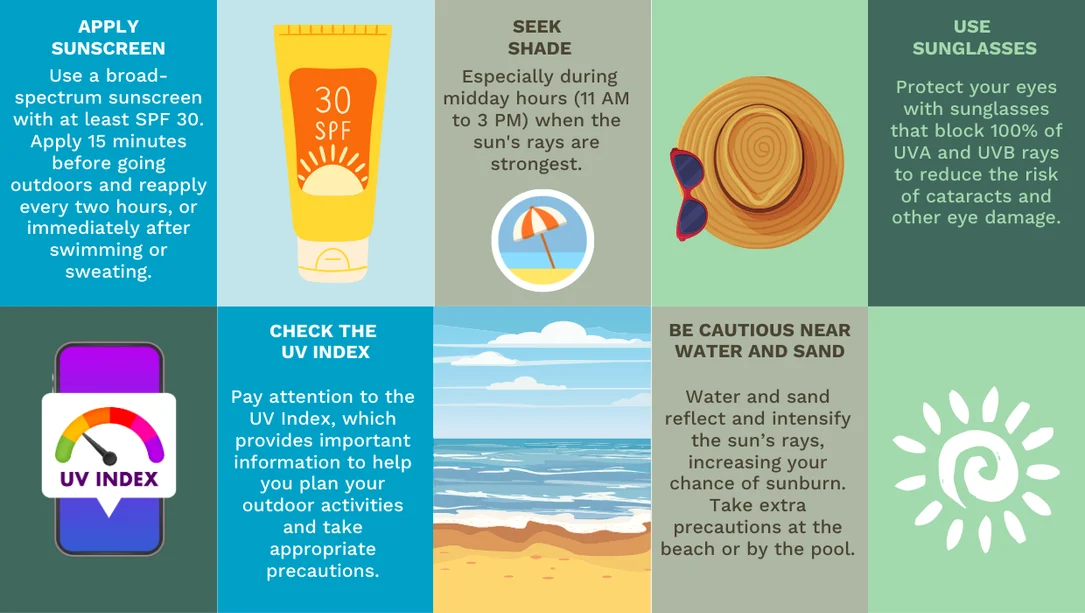
Sunscreen with at least SPF 30 is the baseline. SPF protects against UVB rays, the ones most closely linked with sunburn, but UVA protection matters just as much and is easy to overlook. Look for at least 4-star UVA protection, or the UVA symbol in a circle on the bottle.
Cancer Research UK echoes this: SPF 30 or above with 4 or 5 stars, but sunscreen alone isn’t enough. Shade and clothing carry just as much weight. Their full sun safety guidance is available here.
One of the most common mistakes is simply not using enough. A thin layer won’t give you the protection printed on the bottle. As a guide, the NHS suggests adults need around 6 to 8 teaspoons to cover the whole body, including areas people tend to miss: face, neck, ears, hands, and the scalp if hair is thinning.
If you’re going to be outside long enough to risk burning, the timing matters too. Apply sunscreen 30 minutes before heading out, again just before you leave, and then regularly through the day, especially after swimming, sweating or towel drying. Even sunscreen labelled “water resistant” can wear off, so don’t assume one application will last.
Shade is one of the simplest ways to cut UV exposure. Spending time indoors, under trees, parasols or canopies during the hottest stretch of the day, roughly 11am to 3pm, makes a real difference, particularly for babies, children, older adults and anyone who tends to burn easily. The NHS advises keeping babies under six months out of direct sunlight altogether.
Clothing offers real protection, especially when it covers the shoulders, arms, chest and back. A wide-brimmed hat shields the face, ears and neck, while sunglasses with UV protection (Cancer Research UK recommends looking for UV 400 or 100% UV protection on the label) guard your eyes. Beyond that, loose, lightweight clothing, long sleeves where they’re practical, and tightly woven fabrics that don’t let much light through all add up.
The UV index measures how strong the sun’s ultraviolet rays are at any given time, and it’s worth checking alongside the temperature. Cancer Research UK advises taking precautions once it hits 3 or above, which most weather apps will show.
Cloud cover can be misleading here. UV rays still get through on cool, overcast or breezy days, so a grey sky isn’t a reason to skip protection.
A new mole, a mole that’s changing, a lump, or a patch of skin shifting in size, shape or colour is worth getting checked. Most changes turn out to be nothing serious, but catching things early is always the better position to be in.
If you’re concerned about a skin change, or just want professional advice on sun protection and skin health, you can book a private GP appointment or mole check.
Shade, clothing and sunscreen work best as a combination rather than any one on its own. Stick to SPF 30 or above with proper UVA protection, reapply regularly, and don’t wait until you’ve already started to burn. Small habits now go a long way for your skin later.